
The word robotic can create the wrong impression. In robotic-assisted joint replacement, the technology supports the surgeon’s planning and execution; it does not independently perform the operation.
How planning works
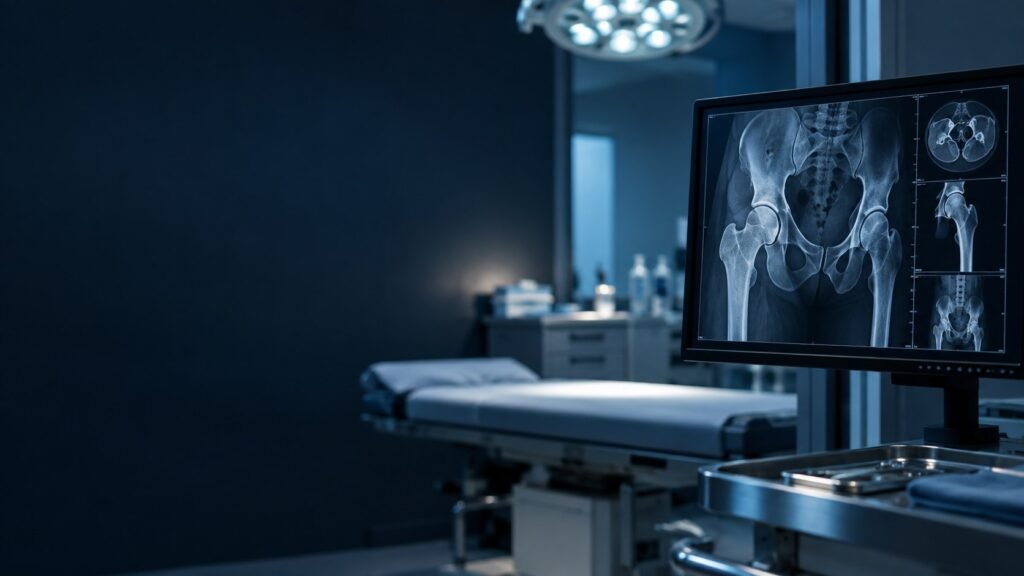
For the Stryker Mako system used by Dr Fraser, pre-operative imaging is used to create a three-dimensional model of the joint. The surgeon uses this information to plan aspects of implant size, alignment and position around the patient’s anatomy.
The plan is specific to the proposed procedure and forms one part of the broader clinical decision.
What happens during surgery
During the operation, the robotic system provides information and helps the surgeon work within planned boundaries during selected steps. Dr Fraser remains responsible for the procedure, controls the equipment and can adjust the surgical plan when clinically required.
Robotic assistance does not remove the usual risks of joint replacement and does not guarantee a particular result.
Who may be suitable?
Suitability depends on the diagnosis, anatomy, imaging, general health and type of replacement being considered. Robotic assistance may be an option for selected primary hip, partial knee, total knee and revision procedures, but it is not automatically the best approach for every patient.
Questions to ask
- Why is robotic assistance being considered in my case?
- How does the planned procedure differ from conventional surgery?
- What are the alternatives?
- What risks and recovery requirements still apply?
- What improvement is realistic for me?