
Hip care
ACL Injuries
The anterior cruciate ligament helps control knee stability during turning, landing and changes of direction. ACL treatment is tailored to the injury, associated damage and the activities you want to return to.
How ACL injuries happen
An ACL injury commonly occurs when the knee twists, pivots, lands awkwardly or changes direction suddenly. Some people hear or feel a pop, followed by swelling, pain and difficulty continuing their activity.
Later symptoms can include the knee giving way or feeling unreliable, especially during turning movements.
Assessment considers knee stability, associated injury, activity demands and rehabilitation before surgical options are discussed.
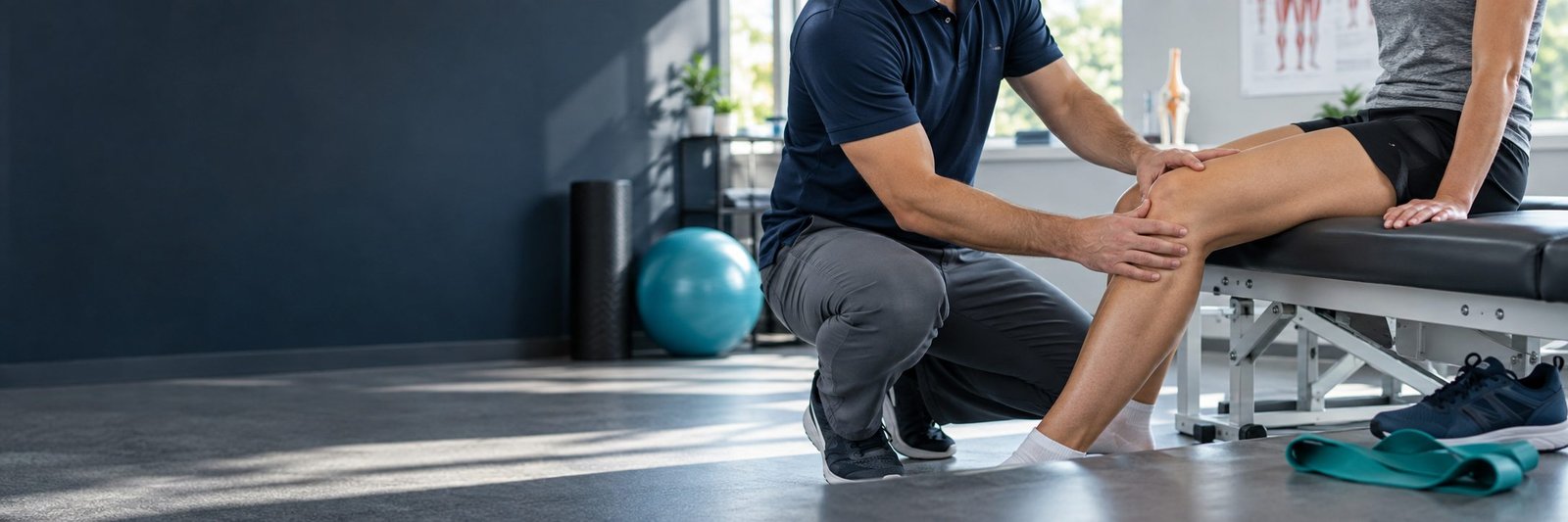
Complex assessment
A plan shaped around the injury and your goals.
On this page
02 / What to know
Assessment and associated injuries
Dr Fraser will ask how the injury happened, assess movement and stability, and review relevant imaging. MRI may help confirm the ACL injury and identify associated damage to the meniscus, cartilage or other ligaments.
Non-operative treatment
Not every ACL injury requires surgery. A structured rehabilitation program can improve swelling, movement, strength and control. This pathway may suit people whose knee becomes functionally stable and whose activities do not require frequent pivoting.
Progress should be guided by symptoms and objective function rather than time alone.
04 / Treatment options
When reconstruction may be considered
ACL reconstruction may be discussed for ongoing instability, a desire to return to pivoting sports or physically demanding work, or when associated injuries influence the treatment plan.
The operation uses a graft to reconstruct the ligament. Dr Fraser will explain graft choices, risks, rehabilitation and realistic return-to-activity expectations if surgery is appropriate.
Returning to activity
Whether treatment is surgical or non-operative, rehabilitation is essential. Return to running, training and sport is staged and considers strength, movement quality, knee confidence and sport-specific testing.
Seek prompt medical assessment after an injury if the knee is badly swollen, deformed, locked, unable to bear weight or accompanied by severe pain.
Discuss your symptoms and treatment options.
ACL Injuries FAQs
Helpful starting points before your consultation. Advice and recovery plans are always tailored to the individual.
Does every ACL tear require reconstruction?
No. Some ACL injuries can be managed with rehabilitation and activity modification. Surgery may be considered where instability persists or a person’s sport, work demands and associated injuries make reconstruction appropriate.
Can other structures be injured at the same time?
Yes. ACL injuries may occur with damage to the meniscus, cartilage or other knee ligaments. Examination and appropriate imaging help define the full injury pattern.
What determines when I can return to sport?
Return is based on healing, strength, movement, knee control, confidence and sport-specific testing rather than a date alone. Your rehabilitation team will guide progression.
What should I bring to my appointment?
Please bring your referral, Medicare details, relevant X-rays or scans, a current medication list and any useful reports from previous treatment or surgery. Contact the practice before your visit if you are unsure what is required.
Explore hip care